
Shopify Hydrogen is the fastest path to a deeply integrated Shopify headless storefront with zero incremental hosting fees on Oxygen for most plans, while Next.js storefronts on Vercel excel at multi‑backend composable builds but can introduce metered usage costs that scale with traffic and dynamic rendering volume, so the right choice hinges on margin sensitivity, content velocity, and Core Web Vitals discipline rather than hype cycles alone.
For organic growth, both stacks can deliver top‑tier SEO via server rendering and React Server Components, but execution on caching, streaming, image optimization, and build strategy will decide who actually wins rankings under Core Web Vitals, not the logo on the framework homepage
A 0.1‑second improvement in mobile site speed increased conversions by 8% for retail and 10% for travel in a Deloitte study commissioned by Google, which is the kind of hard performance truth that turns technology choices into P&L outcomes overnight.
Here’s the thing: the headless storefront wave is cresting on React Server Components, server streaming, and edge rendering, yet the real controversy is whether Hydrogen plus Oxygen’s bundled hosting or Next.js on Vercel’s metered model protects margins while still hitting Core Web Vitals thresholds that Google says matter in search.
That decision affects investors tracking CAC to LTV, consumers who abandon slow carts, and employees who must maintain complex builds or explain overage bills during peak season when edge requests and bandwidth surge. After the hype tapered, Hydrogen emerged as Shopify’s opinionated way to get a high‑performance, fully custom storefront with Storefront API primitives and first‑party patterns, deployed globally on Oxygen at no extra hosting charge on all plans except Starter, which reduces surprises at scale if development discipline is strong.
Next.js storefronts running on Vercel offer unmatched flexibility for composable commerce and a polished path to Core Web Vitals using SSR, SSG, and ISR with a vibrant Commerce starter, but costs shift with traffic via metered edge requests, bandwidth, and compute that demand aggressive caching and static generation to keep budgets in check.
SEO is a wash on paper, both can ship server‑rendered HTML, stream content, and optimize images—but rankings hinge on implementation of render strategy, image pipelines, and data‑fetch boundaries that keep LCP, CLS, and INP in the green, which Google confirms are part of its page‑experience ranking signals.
Key Data
A 0.1‑second mobile speed gain raised retail conversions by 8% and travel conversions by 10%, making performance a direct lever on revenue rather than a nice‑to‑have.
Core Web Vitals are part of Google’s page‑experience signals in ranking, so LCP, CLS, and interactivity metrics can tip competitive outcomes when content relevance is similar, according to Google guidance and public explanations.
Oxygen hosting for Hydrogen storefronts is included on all Shopify plans except Starter with no extra hosting fee, while Vercel’s Pro plan is per seat with metered usage for edge requests and bandwidth, shifting cost profiles with scale.
Connecting the Data
The conversion sensitivity to milliseconds explains why both Hydrogen and Next.js storefronts focus on server rendering, streaming, and image optimization to compress time‑to‑value from first byte to first interaction. If two brands tie on relevance, Google’s page‑experience signals can influence rank positions, so the framework choice must support a build strategy that keeps LCP under 2.5 seconds, steady CLS, and smooth interactivity through lean client bundles and smart caching.
Given Oxygen’s bundled hosting and Vercel’s metered usage, the same traffic profile that lifts revenue can also increase cost on a Next.js storefront unless static generation, cache hits, and CDN efficiency offset the surge, which is exactly where implementation separates winners from replatform regrets.
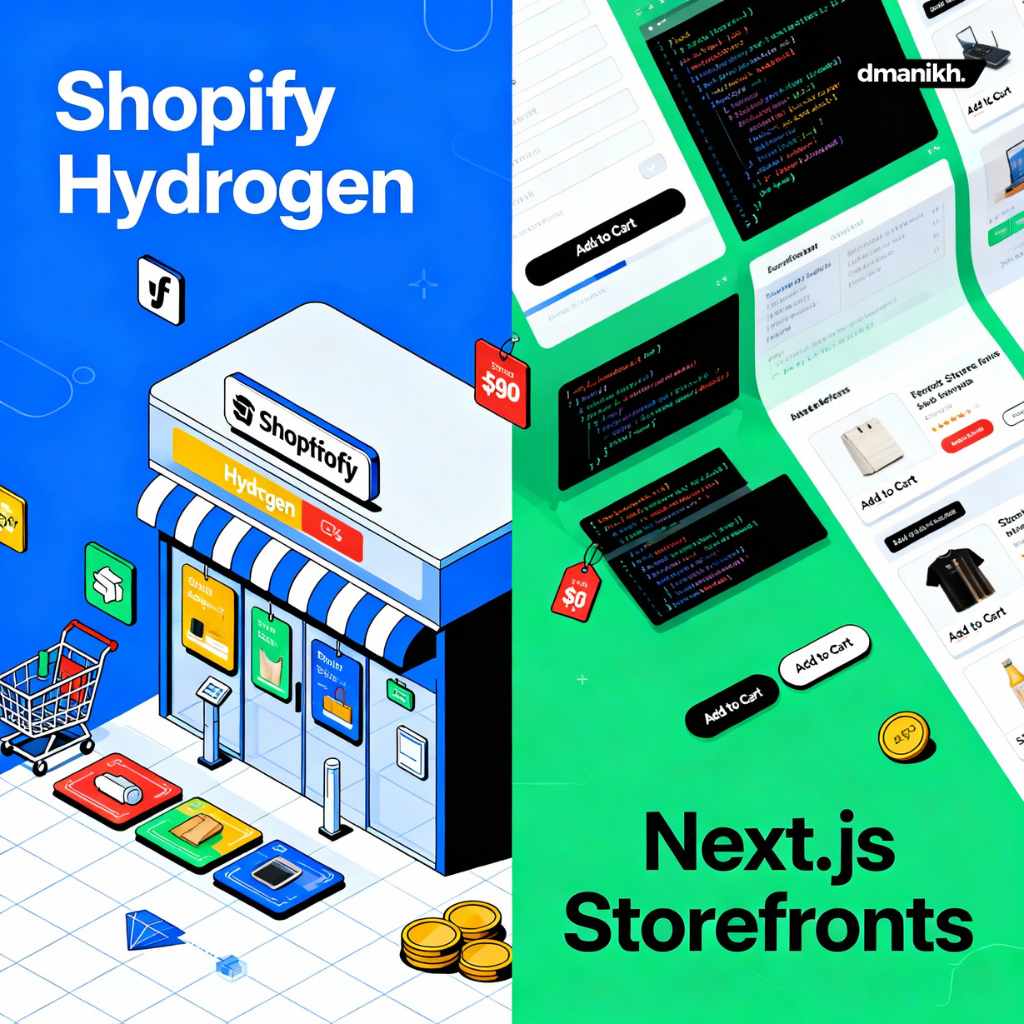
Shopify Hydrogen vs. Next.js Storefronts: Step‑by‑Step Guide
Step 1: Decide the Architecture
Start by mapping the domain model to storefront requirements: if Shopify is the system of record and most experiences are commerce‑centric, Hydrogen aligns the dev stack to Storefront API and server components with first‑party examples and patterns. If the roadmap includes multi‑backend composition PIM, CMS, search, personalization, and payments, Next.js storefronts on Vercel offer routing, ISR, and a well‑maintained commerce starter to assemble these concerns with predictable performance and deployment workflows.
For SEO, both paths can ship server‑rendered HTML with React Server Components, but Hydrogen leans into Shopify primitives while Next.js emphasizes a broader app router ecosystem, so pick the one that makes cache keys, data boundaries, and streaming simple for the team that will live with it.
Keep a frank list of trade‑offs: Shopify‑native velocity versus multi‑vendor flexibility, bundled hosting versus metered usage, and how each choice impacts PR review speed and observability under peak load.
Step 2: Model the Total Cost of Ownership
Cost requires more than plan pricing: Oxygen hosting for Hydrogen is included for all non‑Starter plans, which removes a major line item and simplifies scale math for traffic spikes as long as the app fits within platform constraints like worker limits and request timeouts.
Vercel’s Pro plan is seat‑based and meters usage across dimensions such as edge requests and fast data transfer, with overages kicking in beyond included quotas, so SSR‑heavy pages or media‑rich catalogs can push bandwidth bills unless cache hit rates and static generation are tuned.
This smells like an under‑budgeting risk if cost drivers are not tested early, so run controlled load tests to profile cache policies and identify whether 80% of traffic can be served from CDN with minimal function invocations before launch, because sources say this is where overruns hide.
Factor engineering time too: Hydrogen’s opinionated approach may cut discovery cycles for Shopify‑centric builds, while Next.js composability can shave time integrating non‑Shopify services due to ecosystem maturity and starter kits.
Step 3: Engineer For Core Web Vitals
Google’s guidance puts loading performance, interactivity, and visual stability at the center of the search experience, so design for fast LCP with server‑rendered critical content, compressed images, and lean client hydration, regardless of framework.
Hydrogen’s React Server Components patterns help keep client bundles smaller by default while streaming content from the server, which reduces JavaScript shipped and improves first render timing when applied carefully.
Next.js Commerce combines SSR, SSG, and ISR to pre‑render where possible and stream where necessary, and Vercel’s platform is built to deliver strong Core Web Vitals when caching and edge policies are explicit in the code and config.
Treat images as a first‑class performance problem by leveraging built‑in image optimization, modern formats, and strict width/height attributes to avoid CLS, since the 0.1‑second conversion effect shows how small wins compound at checkout.
Step 4: Choose Rendering and Caching Tactics
Pick the right rendering mode per route: static generation for evergreen content like category pages, ISR for frequently updated product listings, and SSR only where true personalization or rapid inventory changes demand it.
On Hydrogen, use server components and caching boundaries around Storefront API queries to create reusable fragments that stream above the fold quickly, then hydrate minimal interactivity on the client, which aligns with Shopify’s engineering guidance on RSC best practices.
On Next.js, codify cache lifetimes, headers, and revalidation triggers to keep edge requests low and cache hit rates high, because Vercel’s usage model rewards cache efficiency and penalizes noisy SSR paths.
Always back test with lab and field data using Lighthouse, Search Console, and RUM to validate that render choices keep LCP and INP within thresholds Google documents, since rankings and revenue often track with these user‑perceived outcomes.
Step 5: Plan SEO, Analytics, and Content Ops
Both stacks can produce crawlable, server‑rendered HTML, structured data, and canonical tags, but the team must enforce metadata discipline in layout components and ensure that pagination, faceted navigation, and internal linking produce clean, indexable paths.
Hydrogen’s integration with Shopify resources simplifies product schema and availability metadata, reducing glue code around commerce primitives, which improves consistency and lowers the risk of SEO regressions during rapid merchandising.
Next.js storefronts can lean on a broader plugin and template ecosystem to wire up structured data and route‑level metadata, and the Commerce starter bakes in patterns that keep SEO and performance aligned from day one.
Instrument Core Web Vitals with Search Console and field monitoring, then tie speed outcomes to conversion targets, because the Deloitte result makes clear that performance improvements pay for themselves when measured and enforced.
People of Interest or Benefits
“Next.js and Vercel are enabling the world’s fastest e‑commerce, without compromises on dynamism or personalization, thanks to React Server Components,” said Vercel CEO Guillermo Rauch, underscoring the bet that modern rendering can deliver both speed and flexibility when engineered well. Shopify’s engineering team has published best practices for React Server Components learned while building Hydrogen, emphasizing patterns that reduce client bundles and stream content efficiently, signaling that Shopify’s path to speed is grounded in fewer bytes and smarter boundaries rather than gimmicks.
In practice, that means organizations can pick either stack and still hit Core Web Vitals if they keep the HTML simple, the JavaScript small, and the cache hot, which is a benefit to teams and customers who feel the difference on product detail pages and checkout.
Looking Ahead
Analysts forecast that by 2027, at least 60% of new cloud commerce solutions will align with MACH principles, which supports the trend toward composable storefronts and suggests more Next.js‑style integrations across best‑of‑breed services even as Shopify strengthens its native headless stack. Gartner‑cited research points to B2B digital interactions reaching 80% by 2025, which raises the stakes for performance and SEO in complex catalogs where Core Web Vitals and efficient rendering can influence pipeline and margin at scale.
Given that, expect more teams to consolidate on predictable patterns—static where possible, streamed where useful, and server‑rendered only where necessary—to balance speed, cost, and discoverability in a stricter search landscape.
Closing thought
If milliseconds now move millions and hosting bills move margins, the real question is this: will engineering leaders standardize on Hydrogen’s opinionated path or double down on Next.js composability before the next peak season exposes weak Core Web Vitals and surprise overages ?