Shares of attention are shifting fast as Google’s AI Overviews now appear on roughly 11% to 13% of queries and are rising, while click‑through rates have fallen nearly 30% since mid‑2024, changing how traffic flows across the open web. That is the hard fact behind the current controversy over whether optimizing for generative engines and AI agents will eclipse classic blue‑link SEO or force a blended playbook that serves both humans and machines at once.
The trend affects marketers, publishers, e-commerce operators, and investors who must rethink acquisition models as zero‑click behavior approaches 60% and answer engines grab more user intent within their own experiences. Here is the thing: the surface area of “search” has expanded into AI chat, summaries, and emerging agent flows, which means strategy shifts from ranking a page to being cited, summarized, and actioned by systems that do not behave like old SERPs.
The core difference:
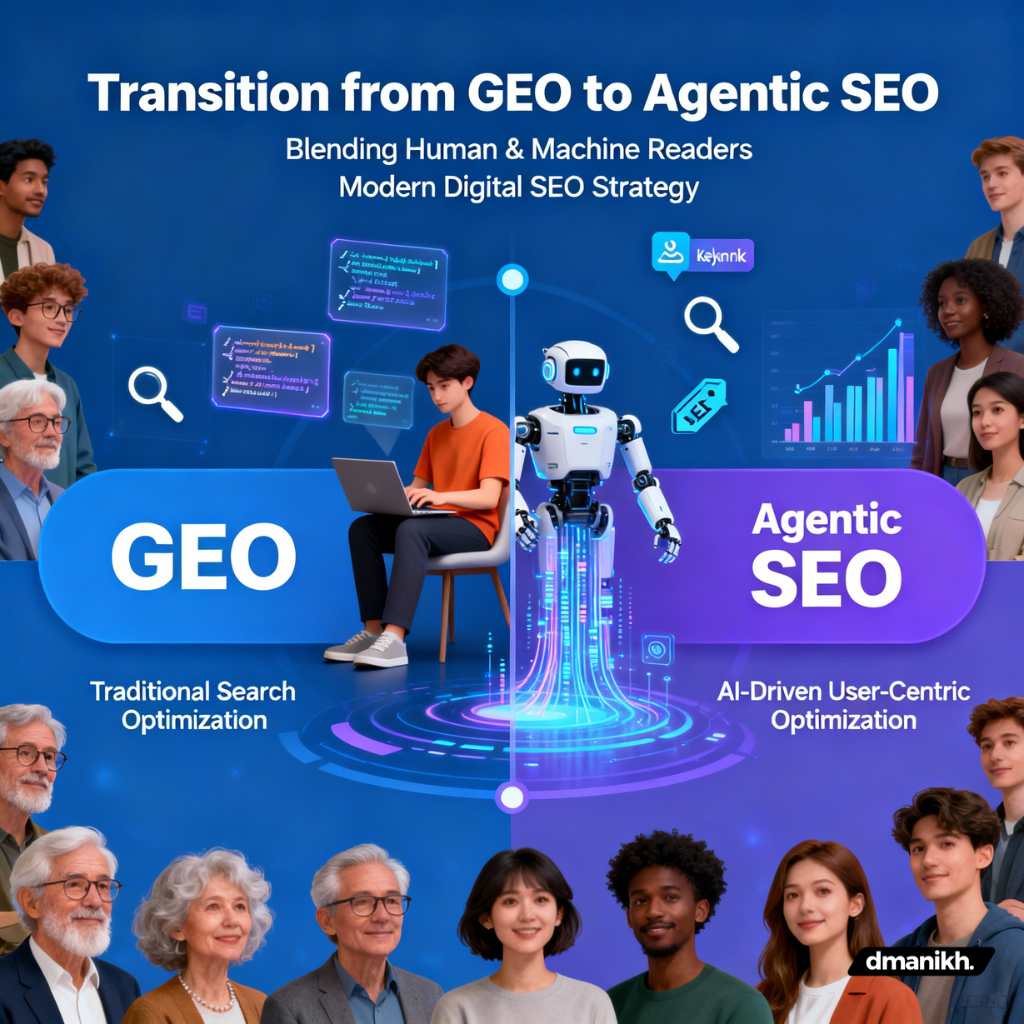
- GEO: Optimize a page for a keyword (surface level).
- Agentic SEO: Optimize your entire knowledge graph for autonomous AI systems to use in complex problem-solving.
After hitting the top of the hype cycle, generative answers and AI agents now combine with classic search to drive the next era of discovery and conversion, and winning brands optimize for both visibility and verifiability across machine‑readable signals and human value. GEO, or Generative Engine Optimization, focuses on how content gets fetched, summarized, and cited by answer engines, while Agentic SEO extends that logic into task flows where AI agents plan, compare, and act on behalf of users.
In practice, this means structuring pages for entity clarity, building authoritative evidence with clean citations, and maintaining consistent brand “vectors” that models can reliably retrieve and reuse across contexts. It also requires re‑benchmarking success beyond rank and CTR toward presence, citation share, and downstream qualified conversions that happen later in the journey when users finally click or when an agent executes a step on a buyer’s behalf.
Honestly, this smells like a platform power play, but pragmatic teams will adapt faster by tracking where AI shows up in their categories and building content that models can trust and reuse at scale.
Key Data
AI Overviews appear on 11%+ of Google queries and are increasing, while click‑throughs have dropped nearly 30% since May 2024, according to BrightEdge.
Zero‑click behavior hit about 58% to 60% of Google searches in 2024 in the US and EU panels studied by SparkToro and Datos, reshaping top‑of‑funnel traffic.
GEO methods can boost visibility within generative answers by up to 40% in benchmark tests, suggesting optimization levers for machine‑summarized results exist and can be measured.
Why it matters for GEO to Agentic SEO
These data points confirm the center of gravity is shifting from ranked blue links to being selected as a trusted input, cited evidence, or executable option within AI summaries and agents, which demands a different content architecture and measurement. Teams need to prove entity authority, provide structured claims with sources, and maintain consistency across brand mentions so generative engines can confidently surface and reuse the work in machine‑first experiences. As AI surfaces grow by category and complexity, the brands that map their category’s AIO exposure and optimize for retrieval, summarization, and agent action will capture qualified demand even as raw CTR erodes.
From GEO To Agentic SEO: Step‑By‑Step Guide
Step 1: Map the New Surfaces
Start by auditing where AI shows up in the category and on which intents, using third‑party research and ongoing spot checks to understand when AI Overviews trigger and which sources they cite. BrightEdge tracking shows AIO presence varies widely by industry, with healthcare, education, insurance, and B2B tech seeing higher prevalence, so each category needs its own map of triggers and gaps.
Expand the audit to include generative engines and answer experiences that matter beyond Google, since GEO is about visibility wherever models synthesize the web, not just traditional SERPs. For each intent family, capture whether the surface summarizes, compares, recommends, or instructs, because those modes demand different content structures and evidence patterns to win inclusion. Keep an intent‑by‑surface matrix and refresh monthly, since AIO prevalence is still evolving and has trended upward across several verticals in 2025.
Step 2: Engineer for Retrieval and Summarization
GEO begins with making content easy to fetch and summarize correctly, which means tightening entity definitions, aligning titles and H1s with the core claim, and using schema to mark people, products, organizations, and FAQs with clean identifiers. Build concise answer blocks that reflect how models excerpt and paraphrase, including short, source‑anchored explanations ready for reuse in AIO and other answer engines.
When possible, provide quantitative support and cite reputable sources inline, since consistency and verifiable proof help engines select and attribute the content during overlap with organic results. Ensure crawlability and internal linking remain strong, because classic ranking still correlates with inclusion in AI answers, and engines often cite from top organic results.
Reduce ambiguity around brand and product entities across the site so embeddings and retrieval systems can reliably associate the content with the correct identity in multi‑source answers.
Step 3: Publish Evidence That Models Trust
Models favor content that resolves uncertainty with clear sourcing, so create primary research, first‑party data cuts, and methodology notes that a generative engine can summarize without losing context. Summaries often compress nuance, so pre‑write the compression by including executive summaries and key points sections that preserve the claim, scope, and units in plain language. Where the category allows, include structured comparisons and criteria checklists that agents can lift into decision flows, increasing the chance of selection when a user intent shifts from learning to choosing.
Keep brand safety tight with accurate claims and transparent limitations, since engines and evaluators penalize sources that conflict with consensus or misstate facts in sensitive categories like finance and health. Refresh high‑exposure pages on a steady cadence so the most cited entries stay current, which also aligns with how answer engines weigh freshness in fast‑moving topics.
Step 4: Train the Brand Vector Across the Web
Consistency across site, social, docs, and product pages helps retrieval, because engines construct a distributed picture of who does what, for whom, with what proof. Align product names, features, pricing units, and outcomes so models do not confuse offerings, and ensure the same canonical claims exist on partner listings and docs that engines often ingest. Provide concise “About” blocks and organization schema on key pages to ground entity identity, which increases the odds of correct attribution in AIO snippets and citations.
For industries with high AIO presence, publish stable glossaries and task‑oriented guides that agents can reuse, and cross‑link them with contextual anchors that reflect real user phrasing. Track how often the brand appears as a citation or mention in AI answers relative to category peers to measure whether the external footprint reinforces the desired brand vector over time.
Step 5: Measure Presence, Not Just Clicks
Raw CTR is falling where AIOs surface, so layer new KPIs like citation share, summary presence, and overlap with organic top results to judge whether GEO tactics move the needle. Use panel data and SERP parsers to estimate AIO exposure by intent clusters, and map those estimates to funnel outcomes like qualified leads and assisted conversions that may occur later in the journey. Build experiments around structured answer blocks, schema variations, and evidence density to see which combinations correlate with more frequent inclusion in AI answers.
Segment reporting by category surfaces, since travel, insurance, B2B tech, and healthcare show different AIO dynamics, and success patterns will not generalize cleanly across them. Sources say a blended dashboard that pairs rank, presence, and downstream revenue will become standard for enterprise teams navigating the GEO to Agentic shift this year, and that seems right given how the surfaces are diverging.
People of Interest or Benefits
“AIOs now appear in over 11% of Google queries, impressions are up 49% since launch, and clicks are down nearly 30%, which means visibility is no longer about rankings or clicks; it is about presence across a new class of interfaces,” said BrightEdge founder Jim Yu, framing the new battleground for brands.
His take aligns with a growing consensus that decision‑stage clicks can still be highly qualified even as top‑funnel visits shrink, which shifts content strategy toward trust signals, criteria clarity, and late‑journey usefulness. Put simply, the winners build for humans while proving reliability to machines, because that is how models decide who gets quoted, cited, and actioned.
Looking Ahead
Analysts now predict GEO will evolve into a broader discipline that spans AI Overviews, answer engines, and agent workflows, where presence and accurate execution matter as much as raw traffic volume. Expect AIO share to keep rising in complex queries and across categories like healthcare, education, insurance, and B2B tech, while overlap with organic results remains partial, rewarding those who optimize for both layers.
As zero‑click behavior persists near 60%, executives will recalibrate growth models toward mixed acquisition that blends citation share, branded search strength, and agent‑driven conversions. The practical implication is stark: marketers must treat models as users, validators, and distributors, then design content and measurement so both humans and machines can verify, select, and act with confidence.
Closing Thought
If AI agents soon broker most discovery and action for complex tasks, will the brands that master GEO and Agentic SEO quietly take the market while everyone else still chases blue links?